
Scientific name: Bertholletia excelsa Bonpl.
Vern: Brazil nut (En); paranoot (Du); noyer du Brésil (Fr); castanheira, castanha-do-Pará (BrP)
Local: ingi-noto (Sr); Brazil nut (GU); châtaigne du Brésil (FG)
Indig: tuha, tuhka (Tr); tope (Way); titko (Ww)
Growth Form: Trees & shrubs
Order: Ericales
Family: Lecythidaceae
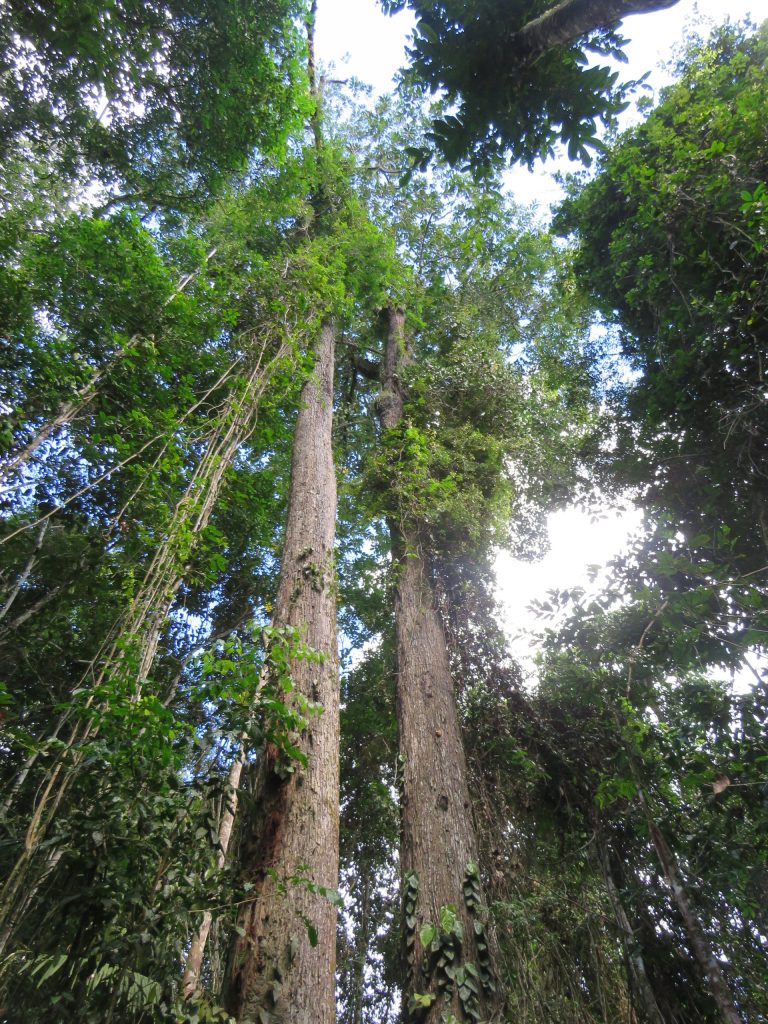
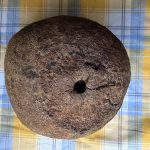
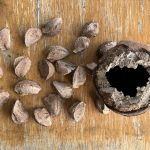
Notes: Bertholletia excelsa Bonpl. (family Lecythidaceae) is arguably the most structurally magnificent and economically vital canopy-emergent tree in the Neotropics. Reaching staggering heights of up to 50 meters and living for over 500 to 1,000 years, it is a flagship species of primary, non-flooded (terra firme) Amazonian rainforests. The high-density stands of Brazil nut trees that occur around some indigenous territories suggests that humans likely played a role in dispersing this species widely across Amazonia.
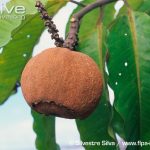
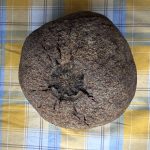
Its unique ecological niche makes it a pillar of South American non-timber forest product (NTFP) economies. Because the tree requires specific large, robust native bees (such as Centris and Eulaema) for pollination, and its exceptionally hard, woody fruits require the powerful jaws of the agouti (Dasyprocta) for seed dispersal, Bertholletia excelsa cannot be successfully grown in monoculture plantations. Every single nut entering global trade is hand-harvested by forest communities from wild, primary rainforest stands.