
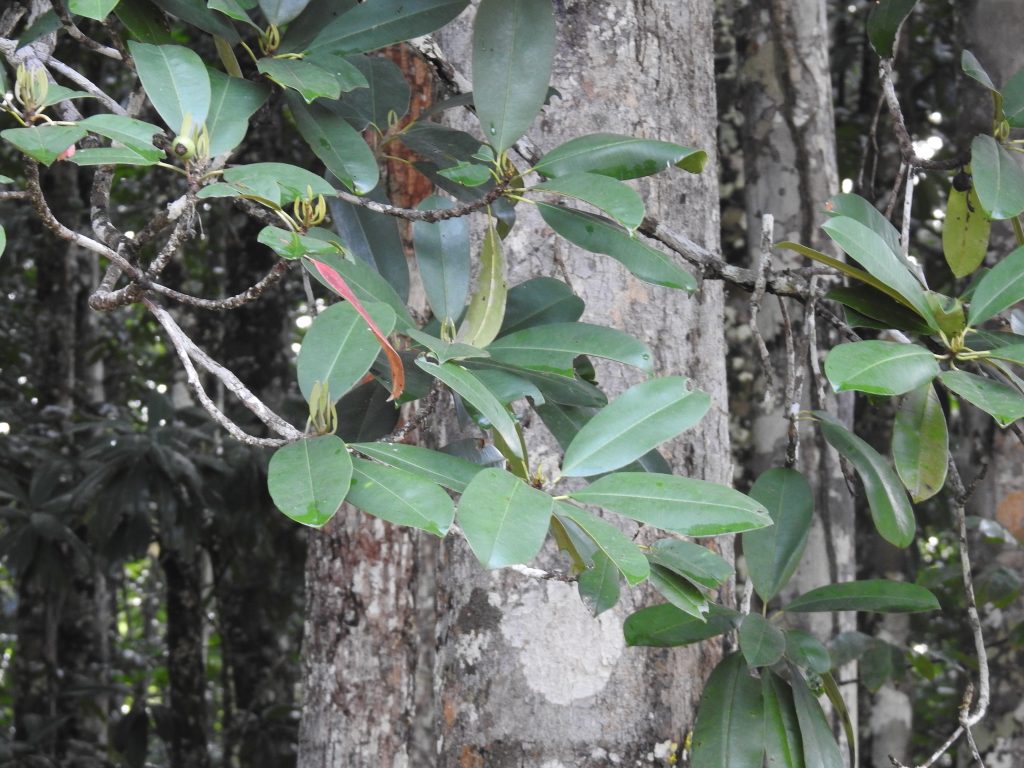
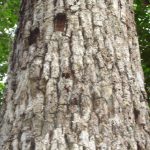
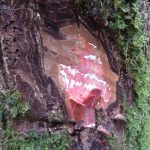
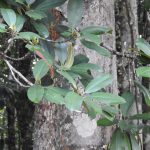
Scientific name: Manilkara bidentata
Vern: bulletwood (En); bulletrie, balataboom (Du); maçaranduba/massaranduba (BrP)
Vern: bulletwood (En); bulletrie, balataboom (Du); maçaranduba/massaranduba (BrP)
Local: boletri, balata (Sr); bulletwood, balata, bleeding heart (GU); balata franc, balata rouge (FG)
Indig: parata, parataran (Tr)
Growth Form: trees & shrubs
Order: Ericales
Family: Sapotaceae
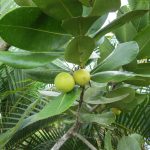
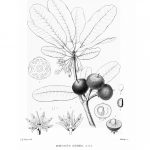
Notes: Manilkara bidentata is easily distinguished from surrounding canopy trees by its thick, sticky, milky-white exudate that flows immediately upon slashing the inner bark, its highly durable dark red heartwood, and its small, smooth, orange-to-yellow globose fruits which contain a sweet, edible pulp surrounding a single shiny seed. Balata—the coagulated latex of Manilkara bidentata (and to a lesser extent, Manilkara huberi)—holds a unique and highly significant place in the history of Neotropical non-timber forest products (NTFPs). Long before modern synthetics, balata was a premier global industrial commodity, driving a massive extraction economy across the Guiana Shield and Amazon basin. Today, while its industrial role has faded, it remains a vital cultural touchstone, an artisan material, and a prime model for historical NTFP booms.