
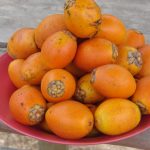
Scientific name: Astrocaryum vulgare
Vern: tucumã-do-Pará or tucum (BrP)
Local: awara / sabana-awarra (Sr)
Indig: awara (Tr)
Growth Form: Palms
Order: Arecales
Family: Arecaceae
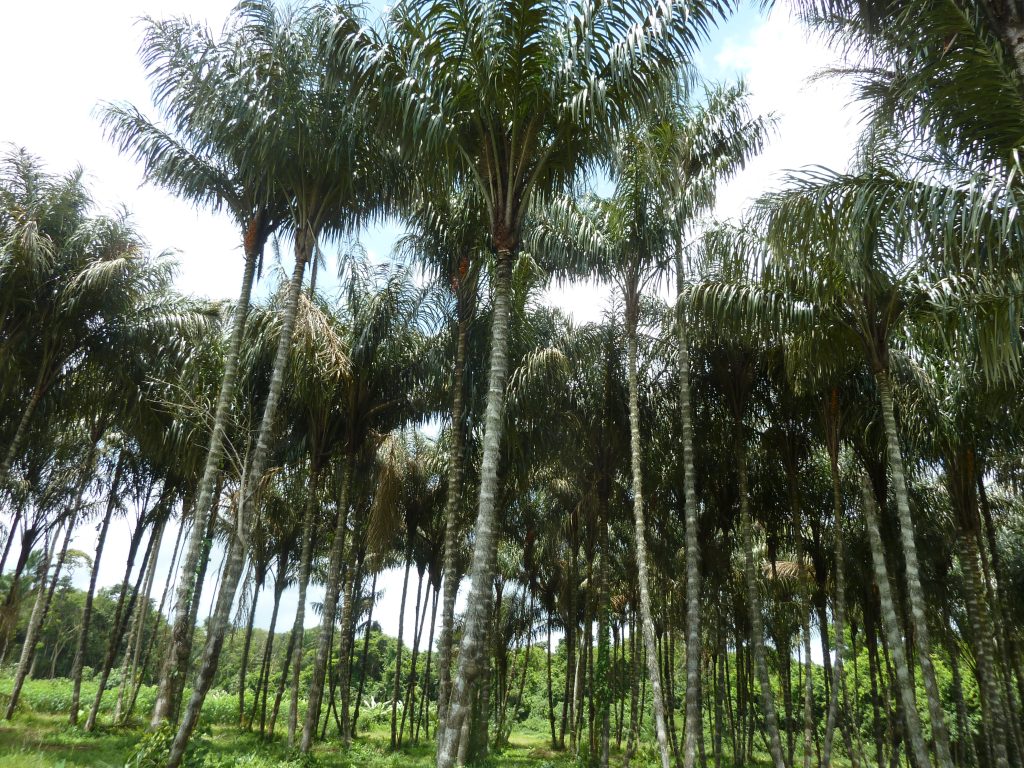
Notes: In Brazil, A. aculeatum is known at tucumã and A. vulgare is typically referred to as tucumã-do-Pará or tucum. A. aculeatum is a massive, solitary (single-stemmed) palm that can reach heights of 15 to 25 meters. Its trunk is distinctively robust and straight. A. vulgare is predominantly caespitose (clustering), typically forming dense multi-stemmed thickets with several smaller, slightly leaner trunks (usually 10 to 15 meters tall) emerging from a single root system.
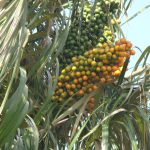
Both Astrocaryum aculeatum and Astrocaryum vulgare are vital multi-use palms across the Guiana Shield, celebrated primarily for their bright orange, vitamin-rich fruits. The oily pulp is eaten fresh, incorporated into traditional dishes, and pressed to yield a highly valued carotenoid-rich cosmetic oil for skin and hair care. Beyond food and oils, their extremely durable fiber—harvested from the young, unexpanded leaves—is woven into resilient hammocks, baskets, and fishing nets by indigenous and traditional communities. Additionally, the remarkably hard endocarp (inner seed coat) is crafted into rings and decorative beads, while the split trunk provides split timber for fencing and rustic construction.